Difference Between Life Insurance vs. Accidental Death Insurance


Quick Takeaways
- Comparing life insurance vs. accidental death insurance reveals that life insurance covers almost all causes of death, whereas accidental death protection pays only for fatal accidents.
- Selecting standard life insurance provides broad financial security for natural causes, terminal illnesses, and accidental events.
- Choosing accidental death and dismemberment insurance offers affordable supplemental coverage for high-risk occupations or sudden physical trauma.
- Understanding life insurance exclusions helps policyholders prevent claim denials related to fraud or dangerous activities.
- Evaluating both policy types enables families to build a tailored financial safety net that fits their budget and protection needs.
Protecting your family's financial stability requires making informed decisions about personal coverage options. Choosing between life insurance vs. accidental death insurance can feel confusing when both products promise a financial safety net for your loved ones.
According to national health statistics from the Centers for Disease Control and Prevention (CDC), chronic medical conditions like heart disease and cancer cause over 60% of all deaths annually, while unintentional accidents account for under eight percent.
Securing the right policy ensures your family receives immediate financial relief when life takes an unexpected turn.
Knowing whether your coverage applies to terminal illnesses or sudden fatal accidents provides true peace of mind. In this comprehensive comparison guide inspired by insurance insights from Aflac, we will explain core policy differences, analyze coverage benefits, break down costs, review major exclusions, and help you select the ideal protection for your household.
What is Life Insurance, and How Does It Work?
Life insurance is a binding legal contract between a policyholder and an insurance carrier designed to provide comprehensive financial protection.
When you purchase a policy, you pay regular monthly or annual premiums. In exchange, the insurer promises to pay a tax-free lump sum death benefit to your designated beneficiaries upon your passing. Standard options include term life insurance, which covers a specific period like 10 to 30 years, and permanent whole life insurance, which lasts your entire lifetime and builds cash value.
What Does Life Insurance Coverage Include?
Comprehensive life insurance coverage provides broad protection across almost every possible cause of death.
- Natural Causes and Illnesses: Pays full benefits for deaths resulting from heart attacks, cancer, strokes, kidney failure, and old age.
- Accidental Events: Covers fatal motor vehicle collisions, fall injuries, accidental drownings, and workplace mishaps.
- Medical Complications: Protects against unexpected surgical or medical treatment complications.
- Global Protection: Maintains coverage wherever death occurs worldwide, provided premiums remain up to date.
What is Accidental Death and Dismemberment (AD&D) Insurance?
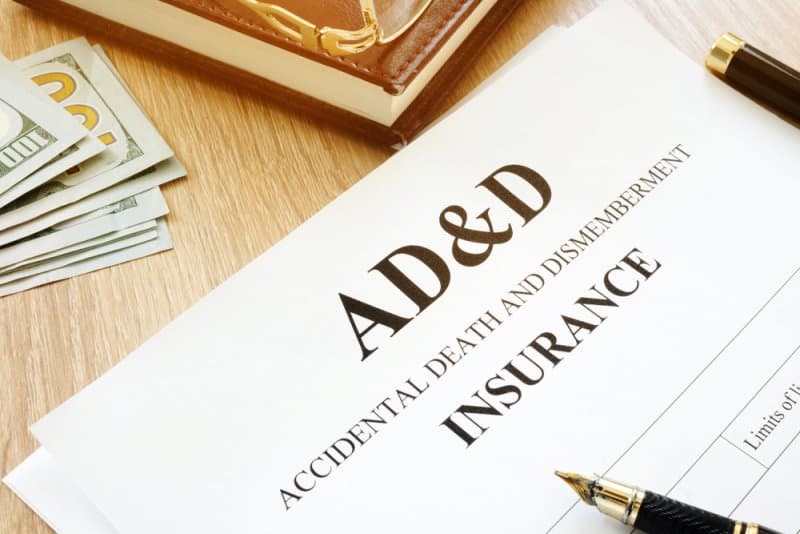
Accidental death and dismemberment insurance, commonly known as AD&D, is a specialized policy that pays benefits only under strict, qualifying accidental circumstances.
Unlike standard life policies, AD&D insurance does not cover natural deaths, chronic illnesses, or medical conditions. However, AD&D insurance coverage provides living benefits if a covered accident results in severe physical injuries, such as the loss of a limb, permanent paralysis, total loss of eyesight, or speech loss. It is frequently offered as a low-cost employer benefit or as an optional rider attached to a primary life policy.
Must Try: Term vs. Whole Life Insurance: Which One is Right for You?
Comparing Life Insurance Benefits vs. Accidental Death Insurance Benefits
Evaluating life insurance benefits alongside accidental death insurance benefits highlights critical operational differences between both policy types.
| Policy Feature | Standard Life Insurance | Accidental Death & Dismemberment (AD&D) |
| Primary Scope of Coverage | Broad protection for natural illness, disease, and accidents | Narrow protection is limited strictly to qualifying fatal accidents. |
| Illness & Natural Death Protection | Fully covered after policy contestability windows close | Completely excluded; pays zero benefits for disease or illness |
| Living Dismemberment Benefits | Generally none, unless specialized living benefit riders are added. | Pays scheduled lump sums for loss of limbs, speech, or sight |
| Underwriting Requirements | Requires health questionnaires, medical records, or exams | Guaranteed acceptance with no medical exams or health checks |
| Policy Cost and Pricing | Higher premiums based on age, health history, and policy type | Very low premiums based mainly on selected coverage amounts |
Analyzing Accidental Death Insurance Cost Factors
Understanding accidental death insurance cost structures reveals why many budget-conscious buyers consider AD&D policies.
Because AD&D policies cover a much narrower range of fatal events, insurance companies face lower total claim payouts compared to standard life policies. Consequently, monthly premiums for AD&D protection are significantly lower. While a healthy adult might pay $30 to $50 monthly for a term life policy, a standalone AD&D policy with a similar benefit payout might cost under $10 per month. However, low costs reflect limited scope, as AD&D pays nothing if death occurs from illness.
Try This: Understanding Burial Insurance vs Life Insurance Differences
Understanding Standard Life Insurance Exclusions
Reviewing common life insurance exclusions helps policyholders understand specific situations where claims may be denied.
While standard life insurance covers almost all causes of death, carriers enforce clear exclusion clauses:
- Contestability Period Restrictions: If a policyholder dies within the first two years of policy issuance, insurers verify application truthfulness before paying claims.
- Material Misrepresentation: Intentionally withholding pre-existing health conditions or tobacco use on applications voids coverage.
- Illegal Activities: Claims resulting from participating in felony crimes or illegal acts are denied.
- Suicide Clause: Most policies exclude death by suicide during the initial two-year contestability window.
Key Decision Guide: Which Policy Fits Your Needs?
Determining whether life insurance or accidental death protection fits your household depends on your health, career, and financial priorities:
- Choose Life Insurance If: You want comprehensive financial protection for your family that covers fatal illnesses, natural aging, and unexpected accidents.
- Choose Accidental Death Insurance If: You work in a high-risk occupation, hold a tight budget, or wish to supplement an existing term life policy with extra accidental protection.
Conclusion
Understanding the distinction between life insurance and accidental death insurance is essential to building a reliable financial protection plan.
Throughout this guide, we explored how standard life insurance covers broad causes of death, examined how AD&D policies focus strictly on qualifying accidental injuries, analyzed cost structures, and reviewed standard policy exclusions. While AD&D offers an affordable option for accidental-injury protection, standard life insurance provides the comprehensive safety net most families need for long-term peace of mind. Evaluating your family's health profile, workplace risks, and monthly budget allows you to select coverage that safeguards your loved ones effectively.
Are you ready to secure your family's financial future with complete confidence and peace of mind? Connect with trusted insurance specialists today to explore tailored coverage plans designed for your budget!
FAQs
What is the difference between life insurance and accidental death insurance?
The primary difference is coverage scope. Standard life insurance covers death from almost all causes, including natural illnesses, heart disease, cancer, and accidents. Accidental death insurance only pays benefits if death results directly from a qualifying, non-illness-related accident.
Does life insurance cover accidental death automatically?
Yes, standard term life and whole life insurance policies cover accidental death automatically. If a policyholder dies in a motor vehicle collision, workplace accident, or fall, the primary life insurance policy pays the full death benefit to beneficiaries, provided no policy exclusions apply.
Does AD&D insurance cover death from illness or disease?
No, AD&D insurance never covers death resulting from illness, disease, natural causes, or medical conditions. If a policyholder passes away from cancer, heart failure, stroke, or infection, an AD&D policy will not issue a payout to the surviving family members.
Can you hold both life insurance and AD&D insurance policies simultaneously?
Yes, you can hold both standard life insurance and AD&D insurance policies at the same time. Many individuals purchase a primary life policy for broad coverage and add an AD&D policy or rider as low-cost supplemental protection to boost benefits in case of accidental death.
Are AD&D insurance payouts taxable for beneficiaries?
No, lump-sum death benefit payouts received from an AD&D insurance policy are generally free from federal income taxes for named beneficiaries. However, any interest earned on benefit payouts held by the insurance company before distribution may be subject to standard income tax reporting rules.
This content was created by AI


©2026 InsuranceAndLeisure.com, All Rights Reserved